


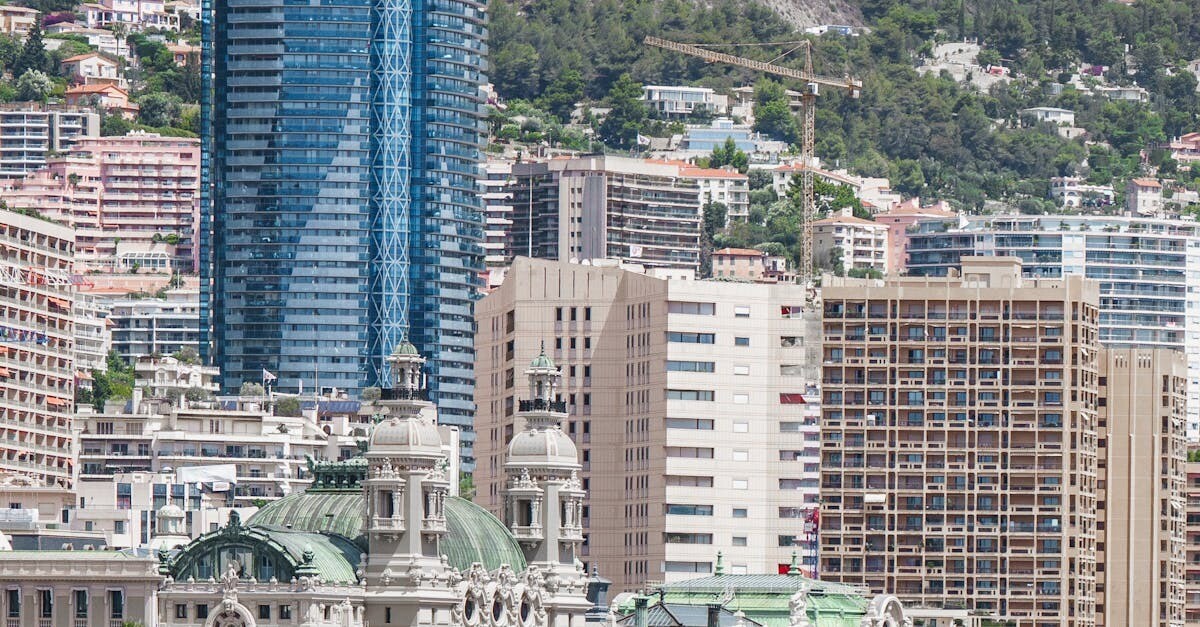
The microeconomy of the Principality and its positioning as a wealth management center generate opportunities to direct resources towards environmental, social, and governance projects, while also demanding stricter controls to prevent reputational and legal risks.
Institutional Context and Priorities Monaco constitutes a state whose economy is centered on services and financial activities, and its limited population allows for more precise implementation of specific policies. Among the main public and private initiatives linked to Corporate Social Responsibility (CSR) are:
- Preservation of the marine environment and sustainable coastal management.
- Investment in sustainable energy solutions and the promotion of energy efficiency.
- The fight against money laundering along with the reinforcement of fiscal transparency.
- The promotion of philanthropy and social programs, both local and regional.
Public action is articulated with foundations and private entities that direct resources towards environmental and social goals, generating synergies between corporate CSR and strategically planned philanthropy.
CSR Strategies in Monaco's Financial Sector Financial actors in Monaco adopt several strategies to integrate CSR into their activities:
- Integration of environmental, social, and governance criteria into investment analysis and wealth management to reduce long-term risks and respond to client demand with sustainable criteria.
- Responsible financial products, such as funds that prioritize companies with good labor practices or projects with measurable environmental impacts.
- Philanthropic commitments and co-investment between private banks, family offices, and foundations to finance conservation and energy transition projects in the Mediterranean region.
- Improvements in compliance and governance, through reinforced internal controls, customer due diligence policies, and transparency registers to prevent the misuse of the financial system.
These strategies provide financial entities with the possibility of combining profit generation with impact goals, while allowing them to offer distinctive services within a highly competitive market.
Present and Emerging Impact Investment Instruments Several key instruments are being used and developed in Monaco to channel capital towards measurable impact:
- Green and social bonds: issuances destined for renewable energy, energy efficiency, or local social initiatives.
- Family offices and sustainability-linked loans: a family office grants regional family companies financing lines subject to achieving social goals, such as boosting local hiring or developing training initiatives, along with verifiable environmental objectives.
These examples show how various actors can synchronize: foundations provide seed capital and guarantees, banks design the financial structures, and family offices offer a long-term vision along with greater flexibility.
Transparency as a Driver of Trust and Capital Attraction Financial and fiscal transparency is essential for CSR to be credible. Nevertheless, evident opportunities arise:
- Leveraging Monaco's strategic location and international prestige as an experimental platform to drive blue finance solutions and marine ecosystem protection.
- Promoting public-private collaborations that support climate adaptation initiatives and strengthen the resilience of cities.
- Creating financial instruments that combine strategic philanthropy and performance, attracting private clients interested in legacy and sustainability.
Useful Suggestions for Monaco's Players * Adopt standardized and public reporting frameworks to measure impact and facilitate comparability among financial products. * Promote financial education on CSR among wealth managers, family offices, and urban clients to increase demand for responsible products. * Boost alliances between foundations, banks, and authorities to mobilize resources towards marine conservation and clean energy projects in the Mediterranean region. * Strengthen transparency and governance controls to protect the reputation of the financial center and facilitate access to international markets.
The combination of political will, financial creativity, and transparency standards can position Monaco as a regional benchmark in impact investing, generating verifiable social and environmental benefits without renouncing its renowned excellence in financial services. This approach demonstrates how a microstate with a strong presence of private capital can redirect resources towards sustainable development goals through concrete financial products, reinforced governance, and close collaboration between public and private actors, generating economic and social value while reinforcing trust and legitimacy in the markets.
Practical Examples * An environmental foundation that drives marine projects: a foundation based in Monaco channels contributions and co-financing towards initiatives aimed at restoring seagrass meadows and monitoring biodiversity. The foundation combines financial aid with impact investment agreements whose remuneration is defined based on restoration metrics. * A private bank with a sustainable investment product: a local bank launches a closed-end fund that invests in regional solar parks and the rehabilitation of historic buildings with energy efficiency criteria.
Although the local volume is limited by the size of the market, issuances are usually supported by reporting frameworks to guarantee the use of funds. Sustainability-linked loans are financing whose cost is tied to the borrower's environmental or social indicators, incentivizing continuous improvements. Impact investment funds managed by private managers and family offices seek financial returns alongside specific impact metrics (emission reductions, local job creation, marine conservation). Blended finance combines public, philanthropic, and private funds to reduce risk and attract private capital to projects with high social or environmental value. Globally, the impact investment market is valued at several hundred billion dollars, showing the potential for financial centers like Monaco to capture and redirect capital towards sustainable initiatives.
Among the main challenges are scaling up, unifying impact metrics, and training specialists in sustainable finance.